
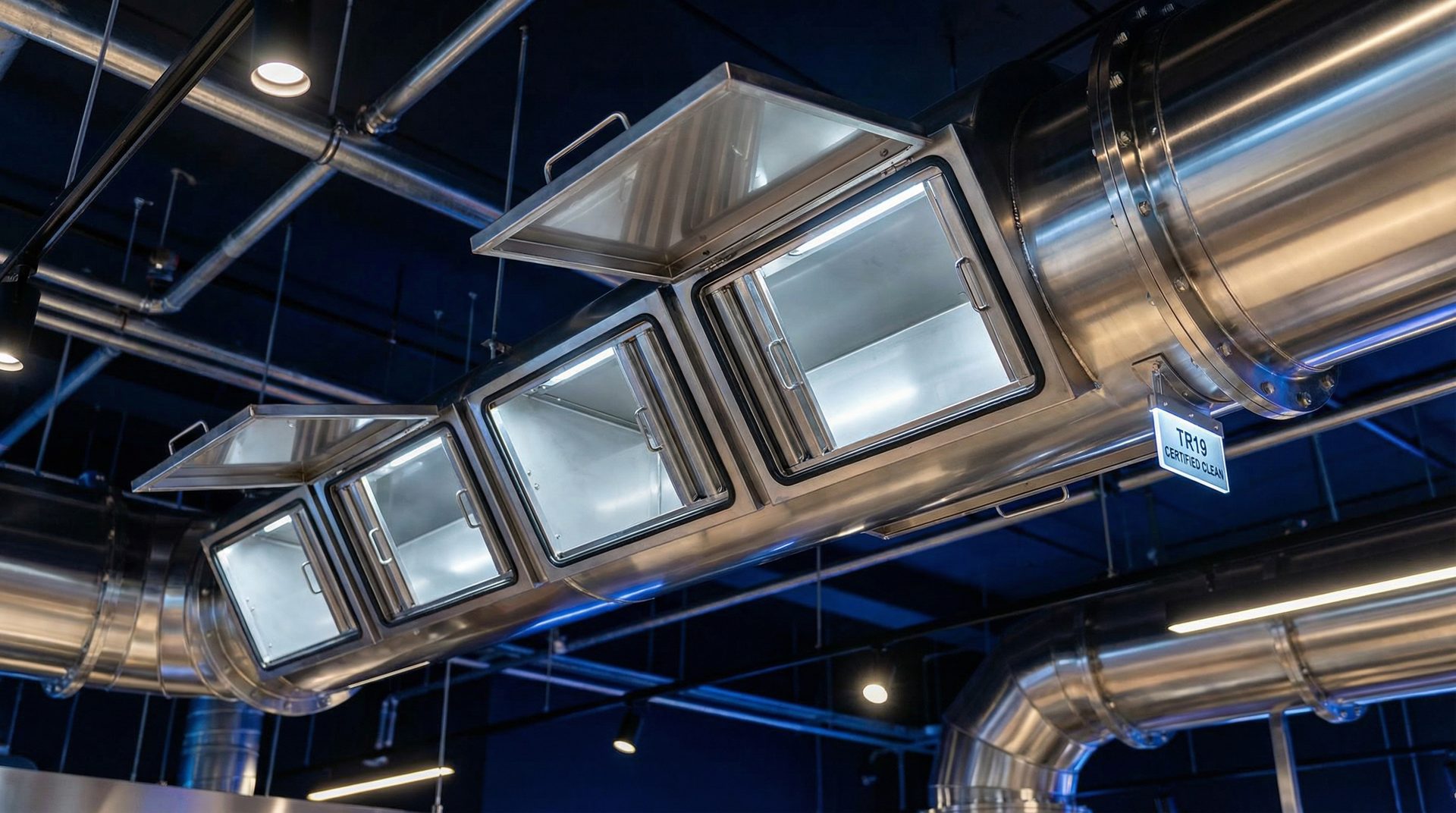
BESA TR19 · Grease ·
Commercial kitchen canopy cleaning
The canopy is the part of a kitchen extract system you can see, which is why it is the part everyone cleans and the part cheap quotes stop at. We clean the baffle filters, the canopy interior back to bare metal, and the plenum behind the filters where grease collects out of sight — measuring grease depth in microns before and after, as part of a full BESA TR19 Grease system clean rather than instead of one.
What kitchen canopy cleaning involves
Four parts, and the second one is where the difference between contractors shows up.
Baffle filters
Removed, soaked and degreased, then inspected for warping, splits and corrosion. A filter that no longer seats properly sends grease straight past it into the duct.
The plenum
The void behind the filters, and the part most often left. It is out of sight, so a canopy can look spotless from the kitchen floor while the plenum behind it is still loaded.
Canopy interior and underside
Cleaned back to bare metal, including the grease channels and collection cups that are supposed to drain but stop working once they are full.
Measured, not just wiped
Grease depth readings in microns before and after at named points, with photographs, so the result is evidence rather than an impression.
A clean canopy is not a clean system
This is worth being blunt about, because it is how most kitchens end up believing they are compliant when they are not. The canopy is one component. The extraction system is the canopy, the filters, the plenum, the full ductwork run, the extract fan and the discharge point at the far end.
A contractor can clean the canopy in an evening, photograph a gleaming stainless steel hood, and issue a certificate. Nothing about that is fraudulent. What matters is whether the certificate says which sections of the system were actually reached — and a canopy-only clean on a system with no access panels will have reached very little.
If your last certificate shows a spotless canopy and says nothing about the ductwork, that is the question to ask. See commercial duct cleaning for the half that usually gets left, and TR19 certificates for what the paperwork should contain.
How often should a kitchen canopy be cleaned?
Day to day, filters are the thing to stay on top of — most busy kitchens degrease them weekly or monthly in house. The full system clean, canopy included, follows BESA intervals set by how many hours a day you actually cook.
| Usage | Cooking hours per day | Clean every |
|---|---|---|
| Heavy use | 12–16 hours per day | Every 3 months |
| Moderate use | 6–12 hours per day | Every 6 months |
| Light use | 2–6 hours per day | Every 12 months |
Replacement baffle filters and grease filters are covered on our filters page.
Common questions
What does kitchen canopy cleaning involve?
Removing and degreasing the baffle filters, cleaning the canopy interior and the underside back to bare metal, and — the part most often skipped — cleaning the plenum, the void behind the filters where grease collects out of sight. Grease depth is measured in microns before and after so there is a record of what was removed.
Is canopy cleaning the same as a TR19 clean?
No, and this is the most common misunderstanding in the trade. The canopy is one component of the extraction system. A TR19 clean covers the canopy, the filters, the full ductwork run, the extract fan and the discharge point. A canopy-only clean can still be issued with a certificate, which is why the scope statement on that certificate matters more than the certificate itself.
How often should a commercial kitchen canopy be cleaned?
The canopy and filters accumulate grease fastest, so many kitchens wipe the visible surfaces weekly and have the filters degreased monthly. The full system clean, canopy included, follows BESA intervals set by cooking hours: every 3 months for heavy use, 6 months for moderate, 12 months for light.
Can I clean the canopy myself?
Kitchen staff can and should wipe the visible surfaces and run baffle filters through a dishwasher or soak tank. What in-house cleaning cannot do is reach the plenum and the duct behind it, or produce measured evidence. The routine cleaning reduces the loading; it does not replace the system clean or the certificate.
What are baffle filters and do they need replacing?
Baffle filters are the angled metal plates in the canopy that force grease-laden air to change direction so grease condenses out and drains away. They are cleanable rather than disposable, but warped, split or corroded filters stop working and let grease straight through to the ductwork. We supply and fit replacements where cleaning is no longer enough.
Why do canopy and duct cleaning quotes vary so much?
Almost always because they cover different amounts of the system. A quote that cleans the canopy is cheap and looks impressive afterwards, because the canopy is the part you can see. A quote that also opens the ductwork costs more and includes fitting access panels where there are none. Compare scope, not price.